
Net Zero Operational Emissions by 2030
NCIG is committed to achieving Net Zero operational emissions by 2030. Our focus is on reducing our Scope 1 and 2 emissions as these are within our direct operational control. We are also working alongside our stakeholders to understand and manage our indirect Scope 3 emissions.
Quantifying our emissions
NCIG’s approach to identifying the sources of our emissions and quantifying them reflects the Greenhouse Gas (GHG) Protocol: A Corporate Accounting and Reporting Standard. This is the world’s most widely used greenhouse gas accounting standards for emission measurement.
Reducing our emissions
Our Net Zero Transition Plan outlines our plan to address our sources of operational carbon emissions, (our Scope 1 and 2 emissions). It includes current and future initiatives and is integrated into our overall business strategy and financial planning. The Plan sets forth strategic considerations for operational and financial planning beyond 2040.
You can view our Plan by visiting the Net Zero Transition Plan page.
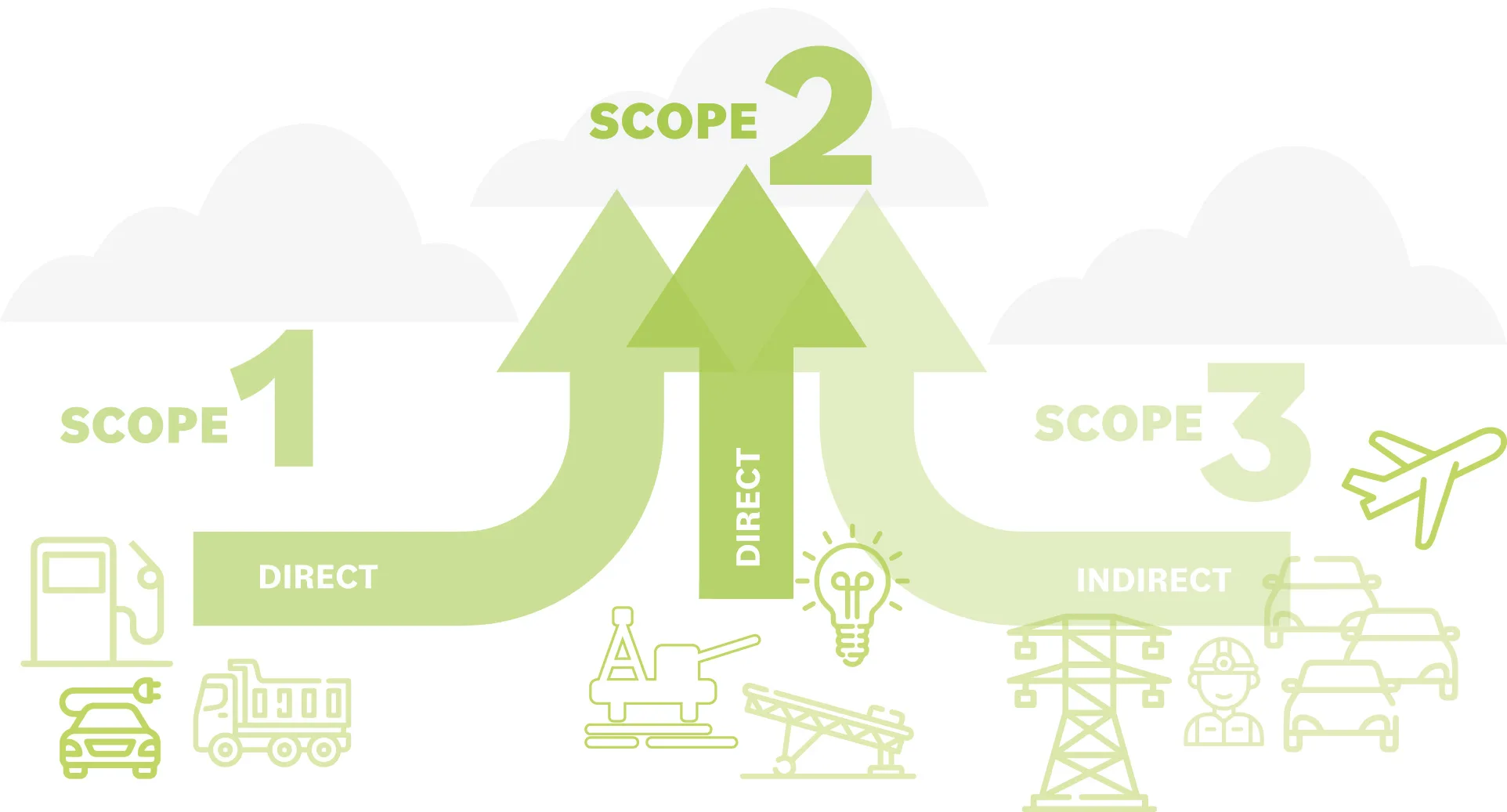
NCIG's Scope emissions can be attributed to a number of sources.
Our Scope emissions
Scope 1
Scope 1 emissions are the direct emissions created from an organisation’s owned or controlled sources, including company facilities and vehicles. Our Scope 1 emissions relate primarily to onsite machinery and vehicle consumption of diesel, oil, grease and petrol.
We are actively transitioning our company vehicle fleet from internal combustion engines to electric vehicles (EV), to reduce our Scope 1 emissions. Our transition is ongoing and reliant upon market availability of suitable vehicles, given the nature of our workplace.
Scope 2
Scope 2 emissions are the indirect emissions associated with an organisation’s operations, primarily purchased electricity, steam, heating and cooling. Our Scope 2 emissions primarily relate to electricity purchased from the grid. 99% of this electricity is used to operate our infrastructure assets such as conveyor belts, stacker-reclaimers and Shiploaders. We have committed to a Power Purchase Agreement (PPA) with a Hunter Valley provider which will ensure that by 2030 100% of electricity utilised by NCIG will come from renewable energy sources. Our Energy Efficiency Group are also diligently working to identify energy efficiency projects to reduce the electricity consumed by our day-to-day operations. Our annual Sustainability Reports and social media channels often highlight the progress of these ongoing projects.
Scope 3
Scope 3 emissions are the indirect emissions that occur in the value chain, both upstream and downstream. Our Scope 3 emissions relate to emissions derived from the production and transport of materials purchased by NCIG, and emissions associated with employee travel and commuting. As a logistics service provider, our Scope 3 emissions are not associated with the products that we transport, store or load on behalf of our customers.
More specifically, since the coal we handle is neither owned nor sold by NCIG, the emissions related to the end use of coal is beyond the boundaries of our Scope 3 emissions. We recognise the steps that are being taken across the coal value chain to increase efficiency and reduce emissions associated with the production, transportation and use of coal.
NCIG has actively sought to identify strategies to reduce our Scope 3 emissions with initial analysis identifying opportunities relating to employee commuting and waste management.
- As part of our vehicle fleet electrification project, NCIG provided awareness training to staff and contractors on the benefits of owning or leasing an Electric Vehicle (EV). To encourage and support our workforce transitioning their personal cars to electric vehicles, we have rolled out an EV fast charger for personal use for employees and regular contractors in our carpark. As this opportunity is being progressively taken up it is effectively reducing the Scope 3 emissions associated with employee commuting.
- Our ongoing focus on the reuse and recycling of waste streams generated by the NCIG operations continues to reduce associated Scope 3 emissions.
We intend to identify and implement opportunities to reduce our Scope 3 emissions where feasible.